
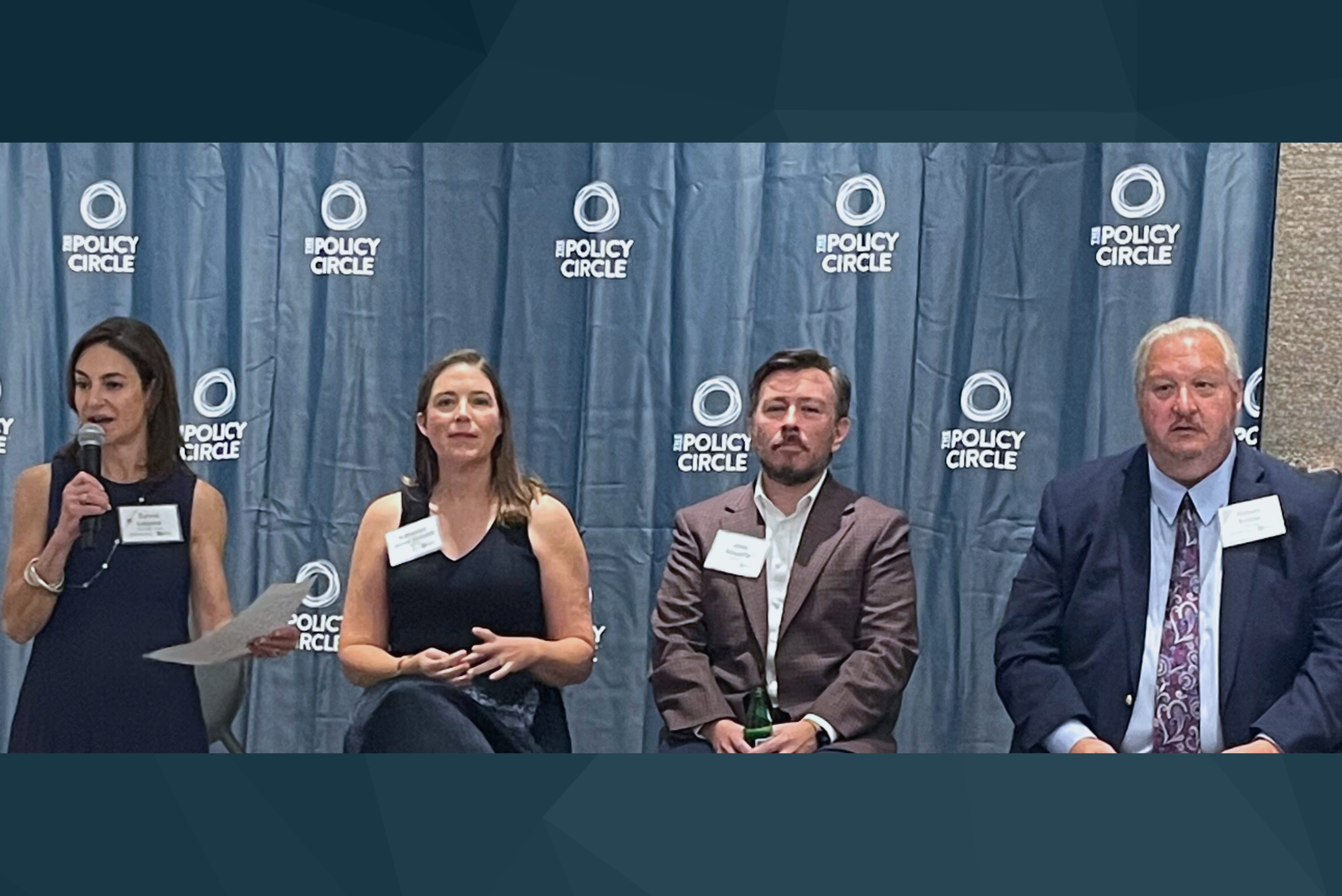
Last week in Houston, The Policy Circle and EdChoice gathered parents, educators, and community leaders to celebrate the passage of Texas’s new Education Savings Accounts (ESA) law and to dig into what it means for families across the state.
The luncheon brought together policy experts, school choice leaders, and advocates to explain the history of school choice, the details of Texas’s new ESA program, and how families, schools, and communities can prepare for implementation.
WHY THIS MATTERS
Texas has passed what may be one of the largest school choice programs in the nation, allocating $1 billion in state funding to support ESAs. For the first time, Texas families will have direct access to funds they can use to customize their child’s education.
“We are in the middle of this changeover from a system that’s a monopoly government-run system to a parent-driven system.”
ROBERT ENLOW, CEO OF EDCHOICE
HOW SAVINGS ACCOUNTS WORK IN TEXAS
UPDATE – Families can apply through the Texas Education Freedom Accounts website. Here’s what to expect:
- UPDATE – Application window: Open until 11:59 PM CT on March 17, 2026.
- Annual amounts: ~$10,500 for students enrolled in approved private schools, $2,000 for homeschoolers, and up to $30,000 for students with special needs.
- Covered expenses: Tuition, uniforms, books, tutoring, therapies, and other approved services.
- Eligibility: All families may apply. If applications exceed capacity, priority goes to special-needs low-income families, then low-income, middle-income, and all other students.
- Renewals: Families must reapply annually. Items purchased with ESA funds cannot be resold.
LESSONS FROM HISTORY
Speakers drew on lessons from the school choice movement dating back to Milton and Rose Friedman, who argued that public dollars should follow students rather than systems. From early voucher programs to modern ESAs, the evidence continues to show positive competitive effects when families are given options.
WHAT SCHOOLS AND COMMUNITIES SHOULD DO NOW
- Private Schools: Once rules are finalized (expected by October 2025), schools should join the Comptroller’s approved provider list. Proactive communication with families will be key. EdChoice has already trained 750 school leaders in Texas on marketing, enrollment, and compliance.
- Families: Prepare now by learning what ESAs can cover, identifying approved schools, and planning to apply as soon as the window opens.
- Community Leaders: Help spread the word, especially in rural areas where misconceptions about ESAs are common. Sharing stories and facts is one of the most effective ways to build trust and participation.
LOOKING AHEAD
Implementation will take time, and there will likely be waitlists in the first year. However, with polling showing that 72% of Texas parents support ESAs, this program is set to reshape education across the state.
A new federal tax credit program starting in 2027 will allow individuals to claim up to $1,700 for donations to scholarship-granting organizations, creating another tool to help families cover costs beyond ESA amounts.
HOW YOU CAN STAY ENGAGED
- Explore our Policy Hub for clear, accessible briefs on school choice and education policy.
- Join the Civic Leadership Engagement Roadmap (CLER) program: A three-month program to help you grow from awareness to advocacy.
- Visit EdChoice.org for resources, polling data, and updates on ESA implementation.
- Sign up for the Texas Comptroller’s email list to receive real-time updates on rules, timelines, and applications.
- Host a Circle conversation with the Education Savings Account Insight or take a step back and look at the landscape with the Education: K-12 Brief.
The passage of ESAs is a historic milestone for Texas families. By staying informed, sharing the facts, and engaging in your community, you can be part of shaping education access in your community and beyond.


